
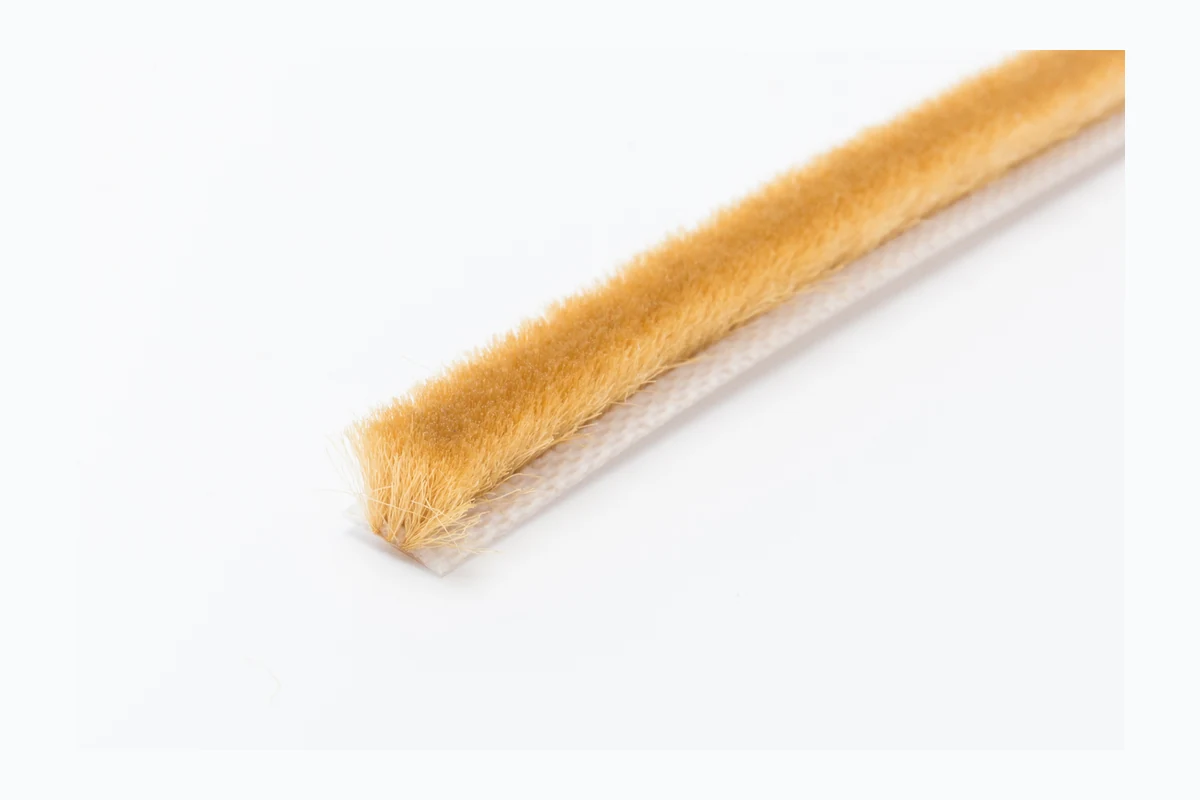
non-siliconed wool pile weatherstrip

Non-Siliconed Wool Pile Weatherstrip

Wool pile weatherstrip is a PP yarn pile seal for window and door grooves. This non-siliconed, or regular, option is used when buyers need stable base width, pile height, PP yarn quality, repeat supply and export packing without paying for unnecessary silicone treatment.

  • Regular PP yarn pile
  • Sample before bulk order
  • Mixed specs and labels
Non-siliconed wool pile weatherstrip

What is non-siliconed wool pile weatherstrip?

Non-siliconed wool pile weatherstrip is a PP yarn pile seal without silicone treatment on the pile surface. For buyers asking what wool pile is, it is the soft pile strip installed in a window or door groove to help control dust, air gaps and light gaps.

Many buyers also call this product regular wool pile, standard pile weatherstrip or non-siliconized pile. The important sourcing point is not only the name. Before quotation, the buyer should confirm the base width, pile height, backing thickness, density, color, roll length and packing method so the supplier can judge whether the requested strip fits the real profile.

Non-siliconed vs siliconized wool pile weatherstrip

The main difference is the surface treatment. Siliconized wool pile weatherstrip has a smoother treated pile and is often selected when the window or door system needs lower sliding resistance, cleaner movement or stronger weather exposure support. Non-siliconed wool pile keeps the regular PP yarn surface and is usually selected when the application is common, the profile gap is not demanding, and cost control is part of the purchasing decision.

For a new project, it is better to compare samples in the actual sash or profile instead of choosing only from the product name. The sample test should check sliding feel, pile recovery, color match, sealing contact and whether the strip stays stable in the groove after movement.

When to choose non-siliconed pile weatherstrip

Choose non-siliconed pile weatherstrip when the buyer needs a regular sealing strip for standard sliding windows, aluminum doors, UPVC windows or distribution stock. It is also suitable when the existing sample is regular pile and the buyer wants to keep the same specification for repeat orders.

If the window system requires extra water resistance, reduced friction or a special fin structure, a siliconized or finned option may be more suitable. Arctivex normally checks the application photo, groove information and old sample before suggesting whether regular, siliconized or finned pile should be discussed.

Common specifications: base width, pile height, backing type and fin option

The key specification starts with base width. This is the backing width that fits into the profile groove. If the base is too narrow, the strip may move or loosen. If it is too wide, installation can be difficult or the backing may deform.

Pile height should be checked against the real gap after the window or door moves. A pile that is too low may not seal the gap, while a pile that is too high can add friction. Backing thickness, yarn density and color should also be confirmed because they affect installation, appearance and repeat order consistency.

  • Base width: commonly checked against the groove opening
  • Pile height: selected by the gap and sliding movement
  • Backing type: woven PP backing for groove insertion
  • Fin option: regular pile or finned pile depending on sealing need
  • Color: grey, black, white, brown, gold or buyer-specified color

How to confirm size before quotation

For quotation, the most useful starting point is a profile drawing, a clear groove photo or an old sample with measured dimensions. A product name alone is not enough for accurate sourcing because different factories may use different names for similar pile seals.

Buyers should measure base width, pile height and backing thickness with a caliper when possible. If a caliper is not available, send close photos beside a ruler and include the application, such as sliding window, sliding door, aluminum profile or UPVC frame. This helps reduce the risk of quoting a visually similar but unsuitable size.

Sample confirmation before bulk order

Before bulk order, sample confirmation should focus on fit and repeatability. The buyer can install the sample in the real groove, move the sash, check whether the pile compresses correctly and confirm whether the backing stays in place.

The sample review should also include color, pile density, roll direction and any label requirement. Once the sample is approved, the same information should be kept as a repeat order reference so future orders do not depend only on memory or informal descriptions.

Export packing options

Export packing should be confirmed before production, especially for mixed specifications or distributor orders. Buyers normally need to confirm roll length, rolls per carton, carton size, label content, carton mark and whether different sizes should be separated by carton.

A common reference layout is 2 rolls per layer, 2 vertical layers and 4 rolls per carton, but the final packing should follow the buyer's roll length, warehouse handling and shipping plan. Packing photos can be reviewed before shipment when labels, mixed sizes or private carton marks are important.

RFQ checklist

A clear RFQ makes the first quotation more useful. Instead of asking only for a price per meter, send the details that affect size, sampling, packing and repeat order control.

  • Base width and pile height
  • Backing thickness or profile groove size
  • Regular, finned or siliconized direction
  • Color and density expectation
  • Roll length and order quantity
  • Carton label, carton mark and packing method
  • Destination country or port
  • Photos, drawings or existing sample reference

Related products and resources

If the application needs smoother movement, compare the siliconized option. If the profile is non-standard, a custom page may be a better starting point. For aluminum window systems, review the brush seal page and prepare the quotation information and packing details before sending an RFQ.

FAQ

What is wool pile in weatherstripping?

Wool pile is a PP yarn pile strip used in window and door grooves to reduce dust, air gaps and light gaps. Buyers normally confirm base width, pile height, density, color and backing before choosing a regular, siliconized or finned option.

What is the difference between non-siliconed and siliconized wool pile?

Non-siliconed wool pile uses regular PP yarn without silicone treatment. Siliconized wool pile has a treated surface that is often selected for smoother sliding movement or stronger weather exposure requirements.

What size details are needed before quotation?

Send the base width, pile height, backing thickness, color, density, roll length, quantity and packing requirement. A profile drawing, groove photo or old sample photo is also useful.

Can ArctiveX match an existing sample?

Yes. An existing sample can be used as a reference for base width, pile height, backing, density, color and packing direction before preparing a quotation or sample roll.

Is non-siliconed wool pile suitable for aluminum sliding windows?

Yes. It can be suitable for aluminum sliding windows when the groove size, gap and movement path match the regular pile specification. A sample test is recommended before bulk order.

What packing information should be confirmed before bulk order?

Confirm roll length, rolls per carton, carton size, label content, carton mark, mixed specification separation and any pallet or warehouse handling requirement.

Related search paths

Specification and RFQ pages