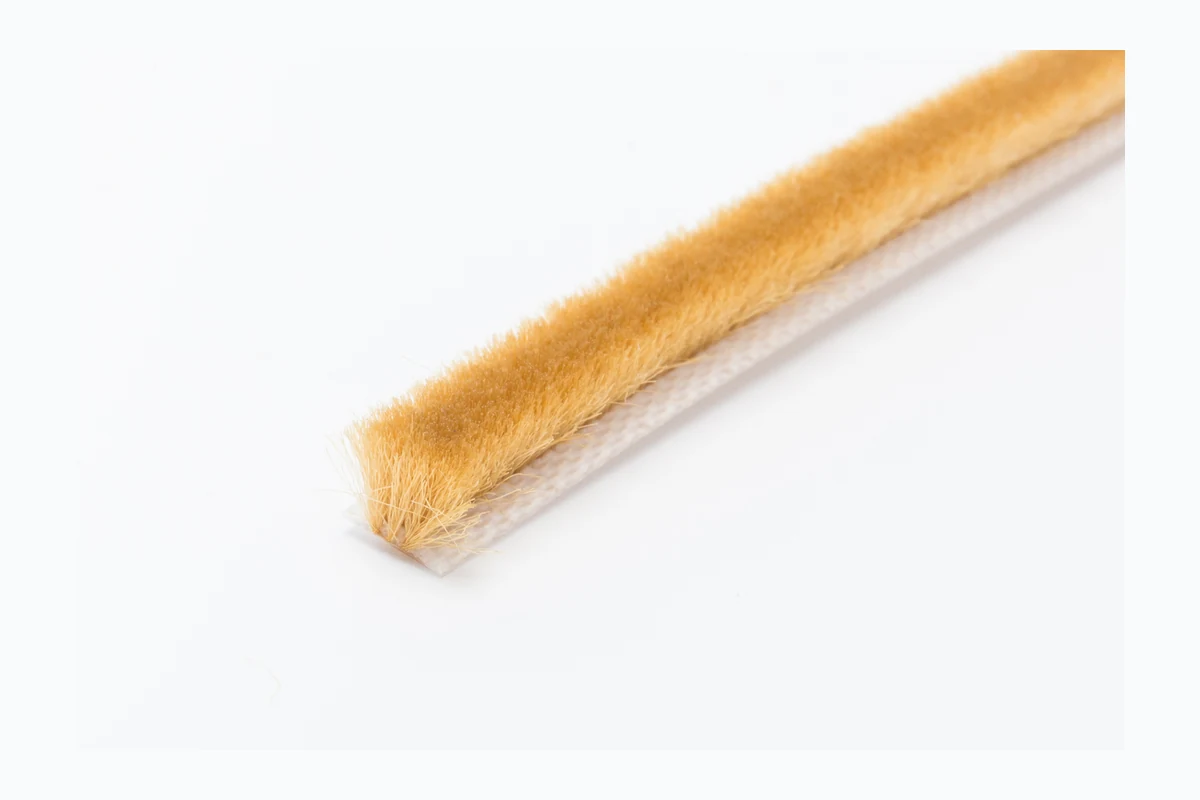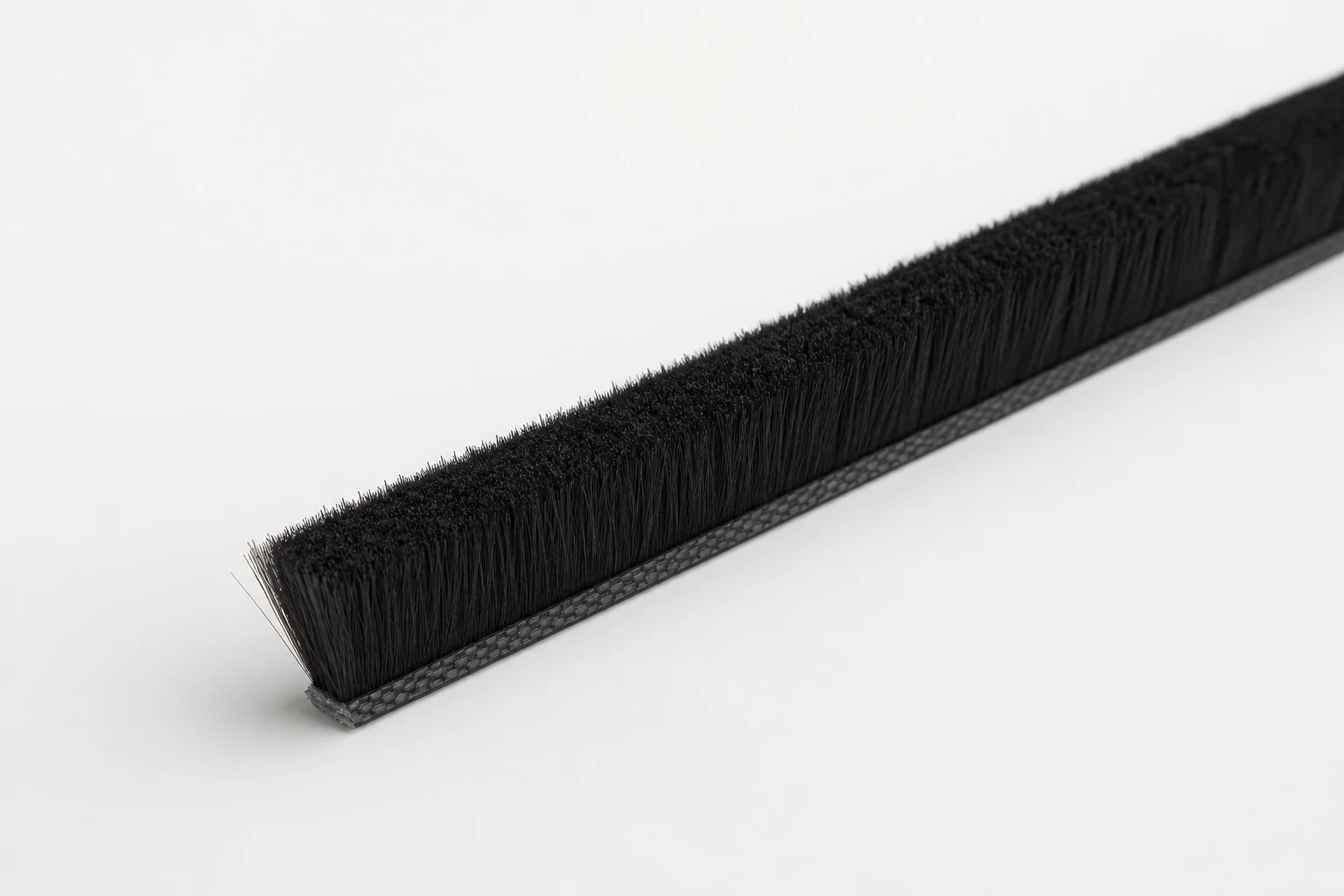
View regular wool pile weatherstrip specifications
Reading a wool pile size
Wool pile weatherstrip is ordered by two numbers in millimeters: base width x pile height. A 5x7 strip has a 5 mm backing and 7 mm of pile above it. Finned pile often adds a third number for the fin height, for example 7x6x6, and some suppliers add the yarn construction code after the size.
Base width decides whether the strip fits the groove. Pile height decides whether it closes the gap. The two are chosen separately, so the same 5 mm base can be supplied with 5, 7, 9 or 12 mm pile.
How to measure base width
Measure the old strip's backing with a caliper across its full width, or measure the groove of the window profile. The backing must slide into the groove without being forced and without moving loosely. If the groove has a narrow opening and a wider inner channel, the backing width should follow the inner channel, and the opening must still hold the strip in place.
Backing thickness matters too. The common reference is about 0.8 mm; a thicker or thinner backing can change how firmly the strip sits in the same groove.
- Measure the old backing with a caliper, not the pile
- Measure the groove inner width and opening on the profile
- Check backing thickness against the groove depth
- If no caliper is available, photograph the end section beside a ruler
How to choose pile height
Close the window or door and measure the gap the pile must fill, from the bottom of the groove to the surface the pile touches. The pile should be slightly compressed when the sash is closed, so it keeps contact without making the sash hard to slide. Too short leaves light and air gaps; too tall adds friction and can push the sash out of line.
If the old strip worked well, copy its pile height. If users reported drafts or a stiff sash, test one size up or down with a sample in the real window before changing the order.
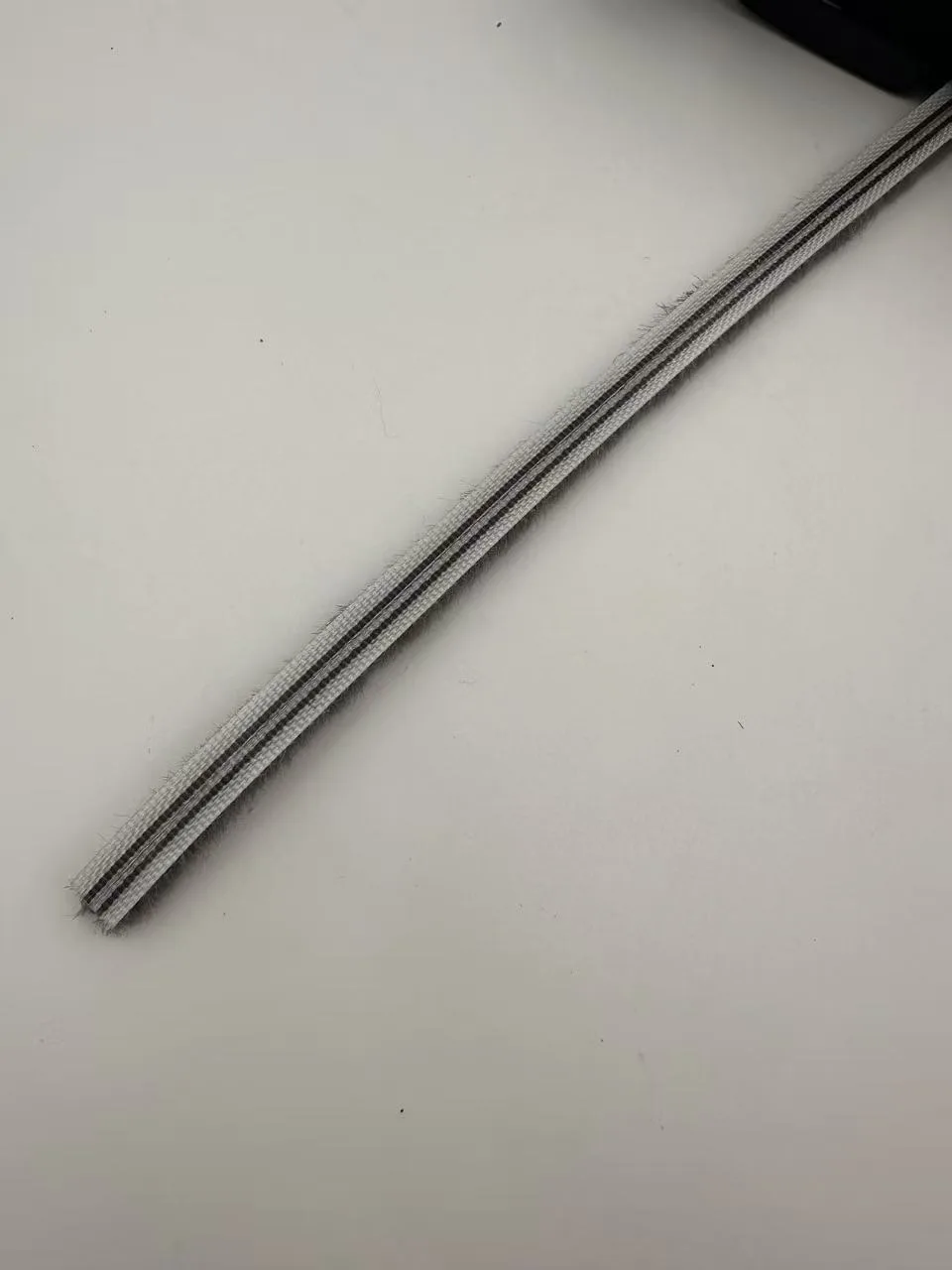

Common size combinations
These base width x pile height combinations appear often in wool pile orders. They are a starting point for comparison, not a stock list; the final size follows the profile.
| Base 4.8 mm | 4.8x5, 4.8x6, 4.8x7 |
|---|---|
| Base 5 mm | 5x5, 5x6, 5x7, 5x8, 5x9, 5x10, 5x12, 5x15 |
| Base 6-6.9 mm | 6x6, 6x7, 6.7x5, 6.8x5, 6.8x6, 6.8x7 |
| Base 7-7.5 mm | 7x4.5, 7x5, 7x6, 7x7, 7x8, 7x9, 7.5x6 |
| Finned | 5x5 with 5 mm fin, 7x6x6, 7x8x8 |
Roll length changes with pile height
A carton holds a similar volume of pile, so taller pile means shorter rolls. Plan quantities in meters and confirm the roll length for each size before packing.
| Low pile, about 5x5 to 5x7 | About 450-500 m per roll, 4 rolls per carton |
|---|---|
| Medium pile, about 7x6 to 7x8 | About 350-400 m per roll, 4 rolls per carton |
| Tall pile, about 5x12 to 5x15 | About 150 m per roll |
| Smaller rolls | 100-250 m rolls packed 8-16 per carton for smaller buyers |
When to add a fin or silicone treatment
Size and pile type are separate choices. Keep the base width and pile height from the groove, then decide whether the position needs a fin barrier against dust, air and water, or silicone-treated yarn for smoother sliding. A UV-stabilized yarn can be added for sun-exposed positions.
RFQ information checklist
Before requesting price, prepare these details so the supplier can check size, packing, sample and repeat order feasibility.
- Base width
- Pile height
- Backing thickness
- Density
- Color
- Roll length
- Packing method
- Order quantity
- Destination port