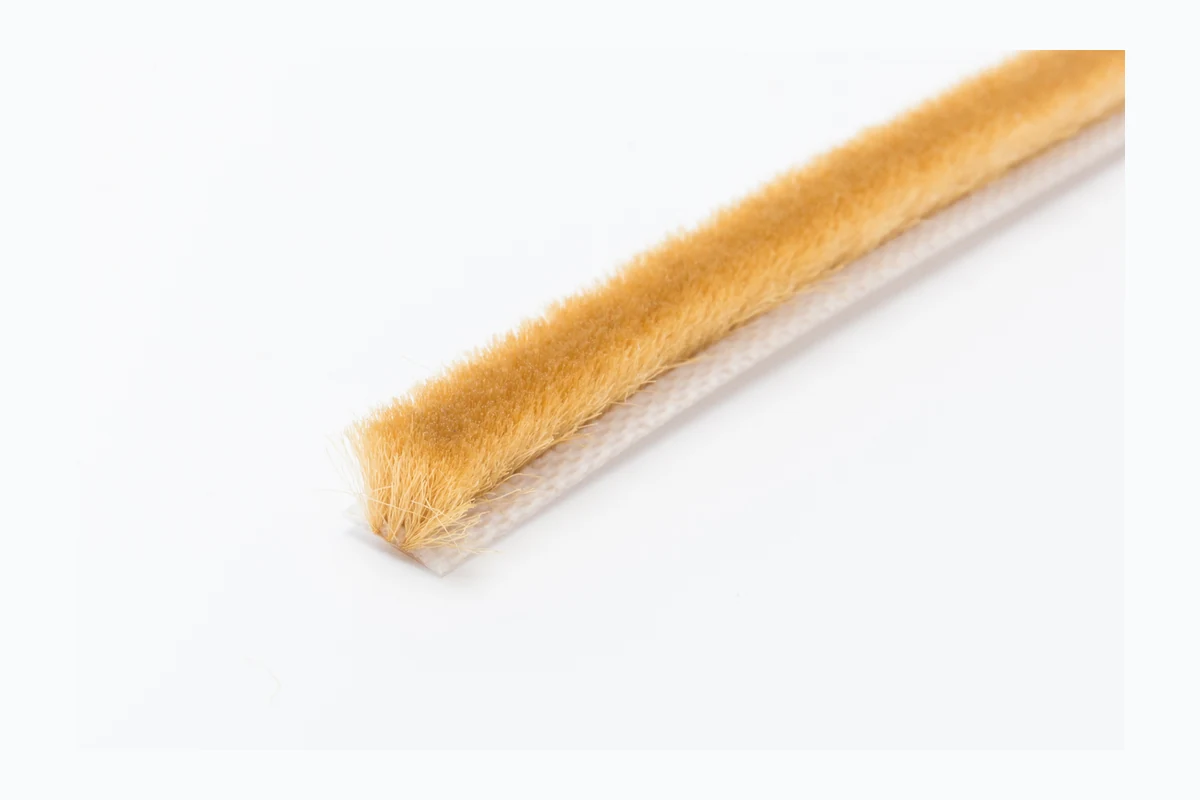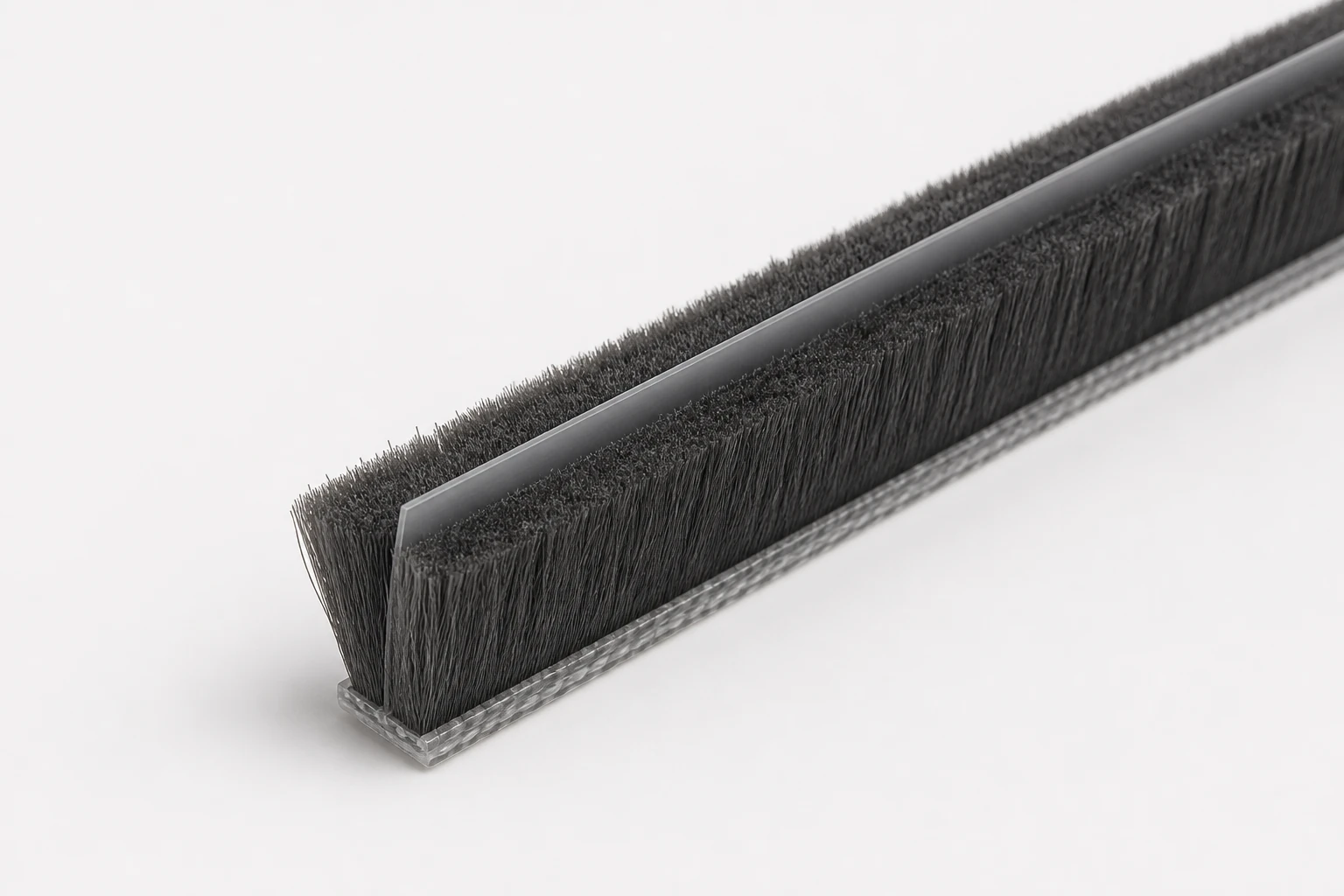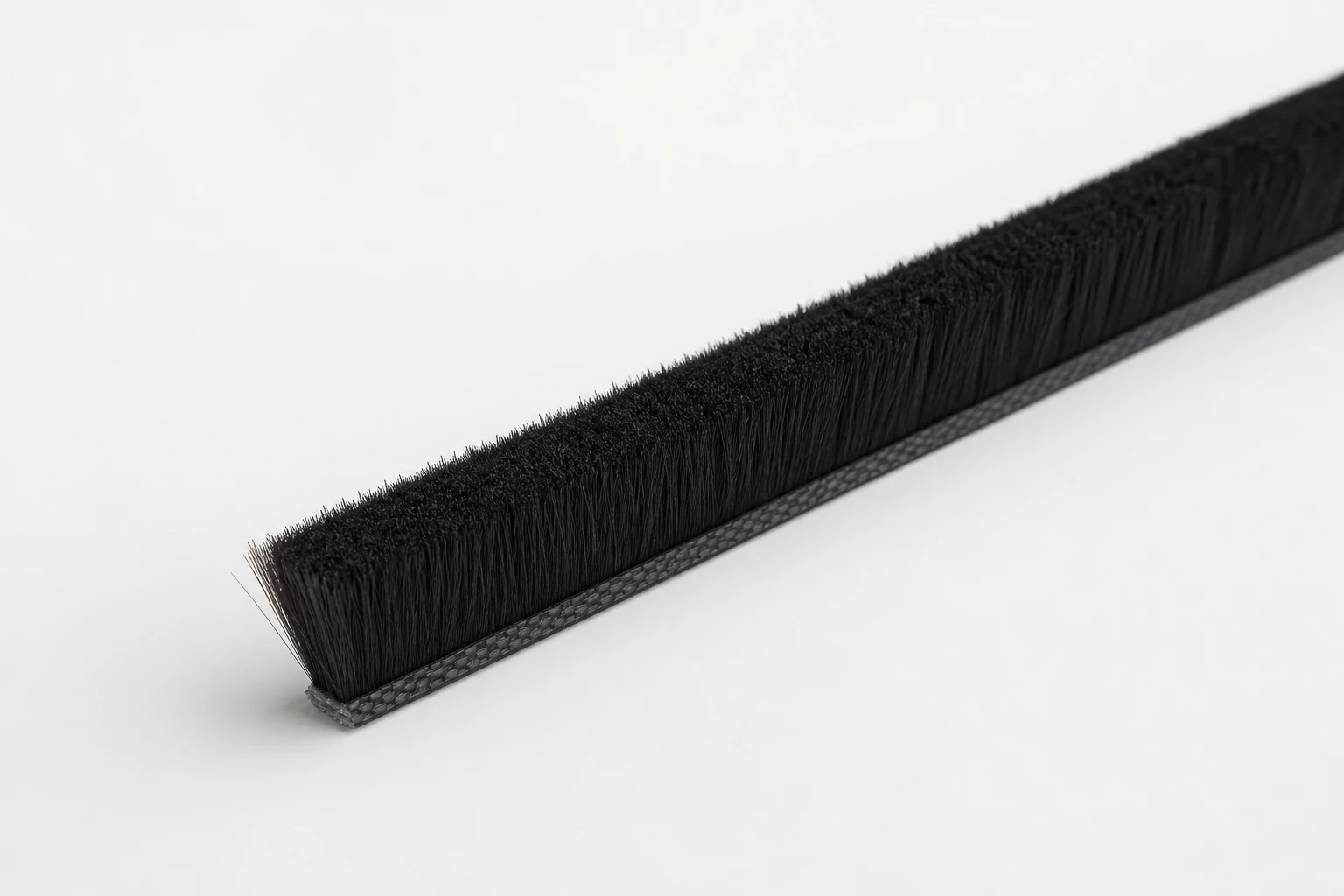
What is wool pile weatherstrip
Wool pile weatherstrip is a PP yarn brush seal fixed to a backing strip. It is inserted into a window or door profile groove, or supplied with adhesive backing for suitable repair applications, to reduce dust, air and light gaps while allowing the sash or door to move.
For B2B purchasing, the product name is only the starting point. The correct strip depends on groove fit, pile height, backing, density, fin option, color, roll length and packing requirements.
Mohair weatherstripping vs polypropylene wool pile
Mohair is a natural animal fiber, but many window-seal searches use mohair weatherstripping as a broad market term for pile or brush seals. ArctiveX products described on this site use polypropylene yarn unless a written specification states otherwise.
Buyers should confirm the actual fiber material instead of relying on the market name. PP yarn, woven backing, adhesive backing and fin options should be compared by the real profile, movement and sample requirement.
| Pile material | Confirm polypropylene yarn or another explicitly documented material. |
|---|---|
| Backing | Match backing width, thickness and shape to the profile groove. |
| Fin option | Use the old sample or drawing to confirm finned or non-finned pile. |
| Adhesive option | Test the actual surface when an adhesive-backed strip is required. |
Next step
Already know your groove or profile?
Send a profile drawing, an old sample photo, or the known base width and pile height. ArctiveX reviews groove fit and specification before quoting.
Where it is used
Common applications include aluminum sliding windows, sliding doors, window and door frames, mosquito screen frames and distributor replacement stock. The same product may be described as wool pile, pile weatherstrip, brush seal, window pile seal or bristled sealing strip.
- Aluminum sliding windows
- Sliding doors and balcony doors
- Window and door frames
- Aluminum profile systems
- Distributor stock for common replacement sizes
Main types buyers compare
Regular wool pile is used for common window and door grooves where cost control and repeat supply matter. Siliconed wool pile is discussed when smoother movement or outdoor exposure performance is important. Finned wool pile adds a center or side fin barrier for profiles that need stronger dust, air or water control. Self-adhesive wool pile is used when the application surface is suitable and no insertion groove is available.
- Regular wool pile for common sliding window and door channels
- Siliconed wool pile for smoother movement discussion
- Finned wool pile for extra barrier requirements
- Self-adhesive wool pile for suitable repair or retrofit surfaces
Key dimensions buyers should know
Base width should match the profile groove. Pile height should close the actual gap without adding unnecessary sliding resistance. Backing thickness, backing shape, fin or non-fin direction, color and roll length all affect installation, quotation and repeat-order consistency.
| Base width | Match the profile groove opening and avoid loose or forced installation. |
|---|---|
| Pile height | Check the real gap after sash movement, not only the catalog size. |
| Backing | Confirm thickness, shape and whether it fits the current profile. |
| Fin / non-fin | Use finned pile when the profile needs an extra barrier. |
| Color | Confirm by sample or approved reference for repeat orders. |
| Roll length | Set roll length and direction before packing and warehouse receiving. |
Common sourcing mistakes
A frequent mistake is asking only for price per meter before checking the groove and old sample. Another is choosing pile height from a photo without confirming how the window or door moves. Buyers also lose time when carton marks, labels and mixed specifications are left until after production planning.
- Quoting from product name only
- Ignoring backing thickness and groove fit
- Choosing pile height without checking sash movement
- Treating regular, siliconed and finned pile as interchangeable
- Leaving roll length, label and carton mark details too late
Why sample confirmation matters before bulk order
Sample confirmation helps check whether the base stays stable in the groove, whether pile height compresses correctly, whether the color is acceptable and whether the fin direction matches the application. It also creates a practical reference for repeat orders.
What information to send before asking for quotation
Send the current specification, drawing, old sample photo or profile groove photo together with quantity, color, roll length and packing details. If you are not sure about the size, a clear section photo beside a ruler is often more useful than a general product name.
RFQ information checklist
Before requesting price, prepare these details so the supplier can check size, packing, sample and repeat order feasibility.
- Base width
- Pile height
- Backing thickness
- Density
- Color
- Roll length
- Packing method
- Order quantity
- Destination port
Send your current specification, drawing, or old sample photo. We can help check base width, pile height, backing, fin option, color, roll length and packing before quotation.