Introduction
Buyers often compare finned and non-finned wool pile weatherstrip when matching aluminum sliding window profiles. The right choice depends on groove size, pile height, air and water sealing requirement, sliding smoothness, fin option and backing type.
Do not choose only by product name. A finned pile and a non-finned wool pile can look similar in a quick photo, but the backing width, pile height, fin position and profile gap decide whether the strip is practical for the window system.
What is finned or film pile weatherstrip
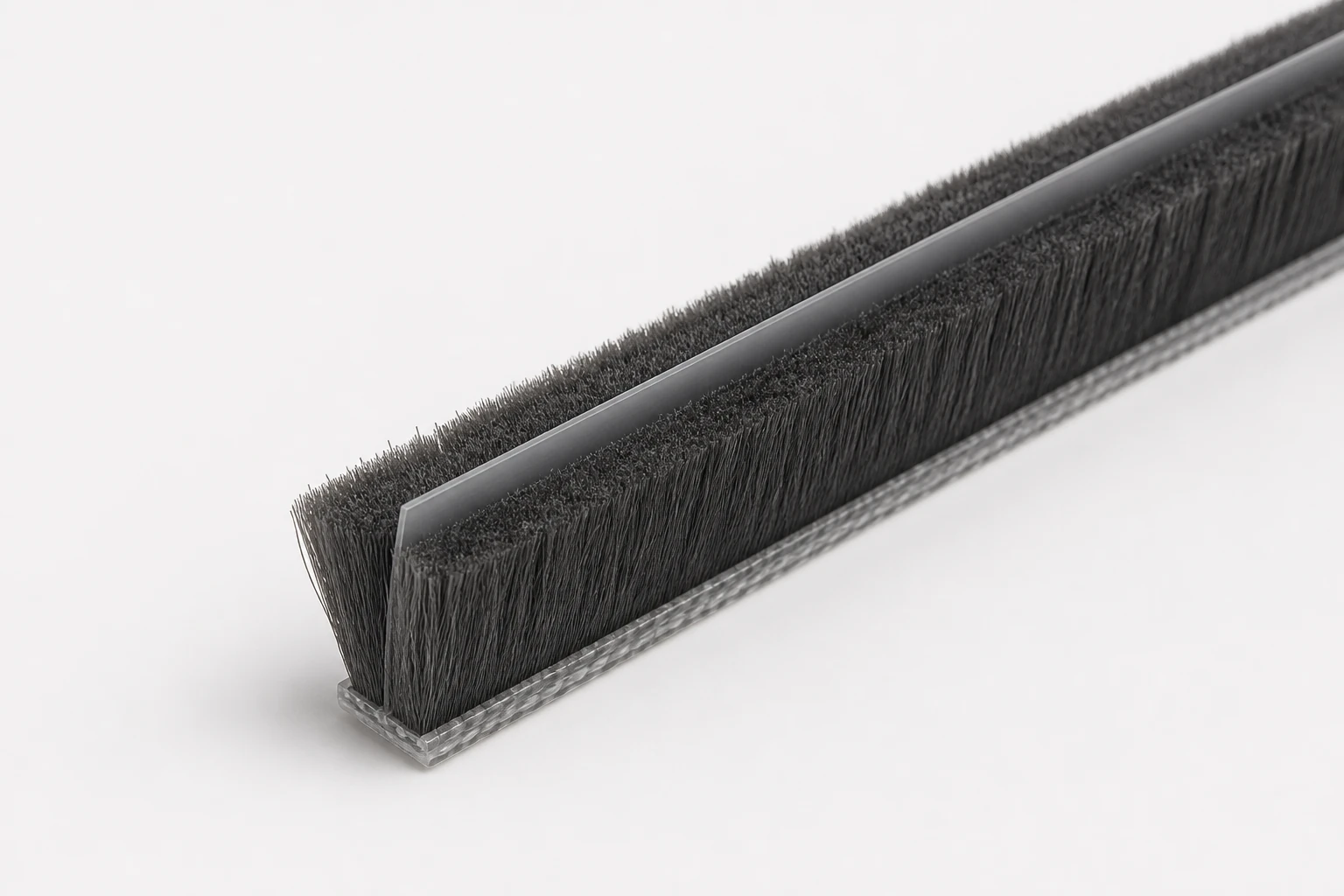
Finned pile, also called film pile in some buying documents, includes a fin or film element inside or around the pile area depending on the specification. It is commonly discussed when buyers need additional sealing support in sliding window or sliding door systems.
The fin option should be checked against the real groove and sash movement. It can help separate a finned SKU from regular pile, but the final choice should still be confirmed by base width, pile height, backing type and sample or drawing review.
What is non-finned wool pile weatherstrip
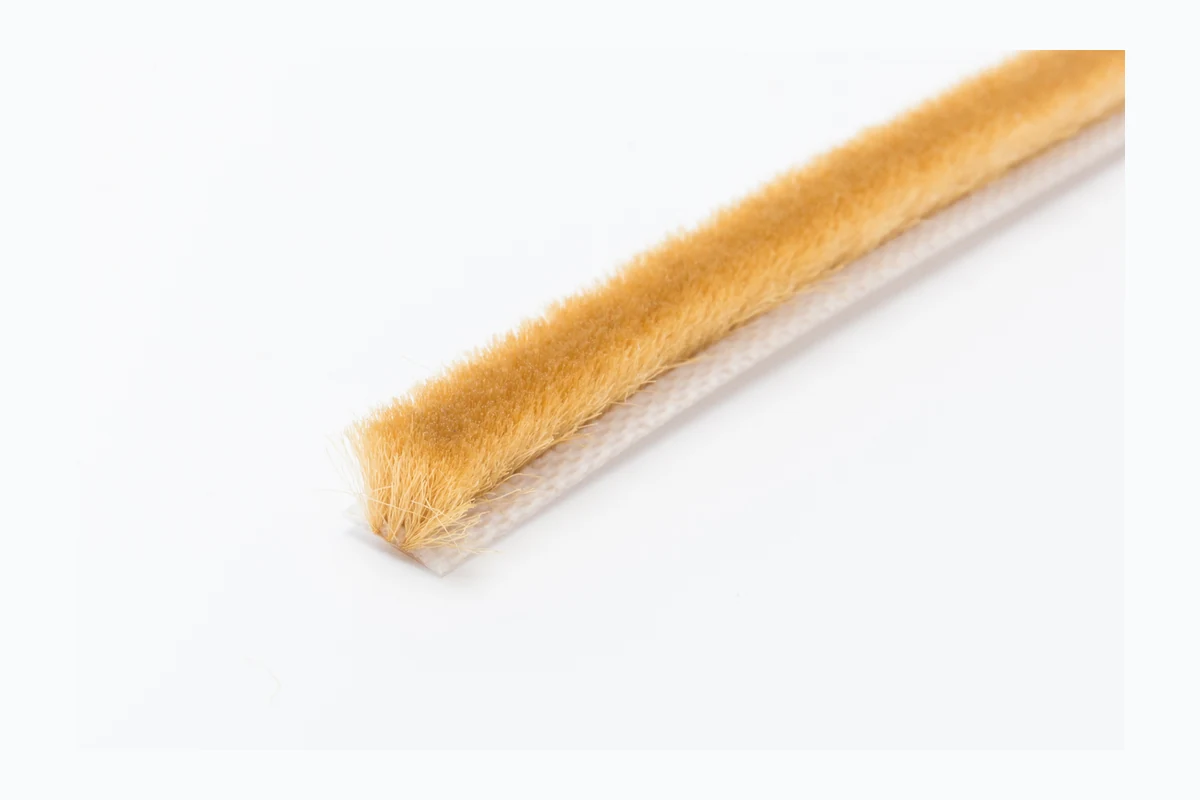
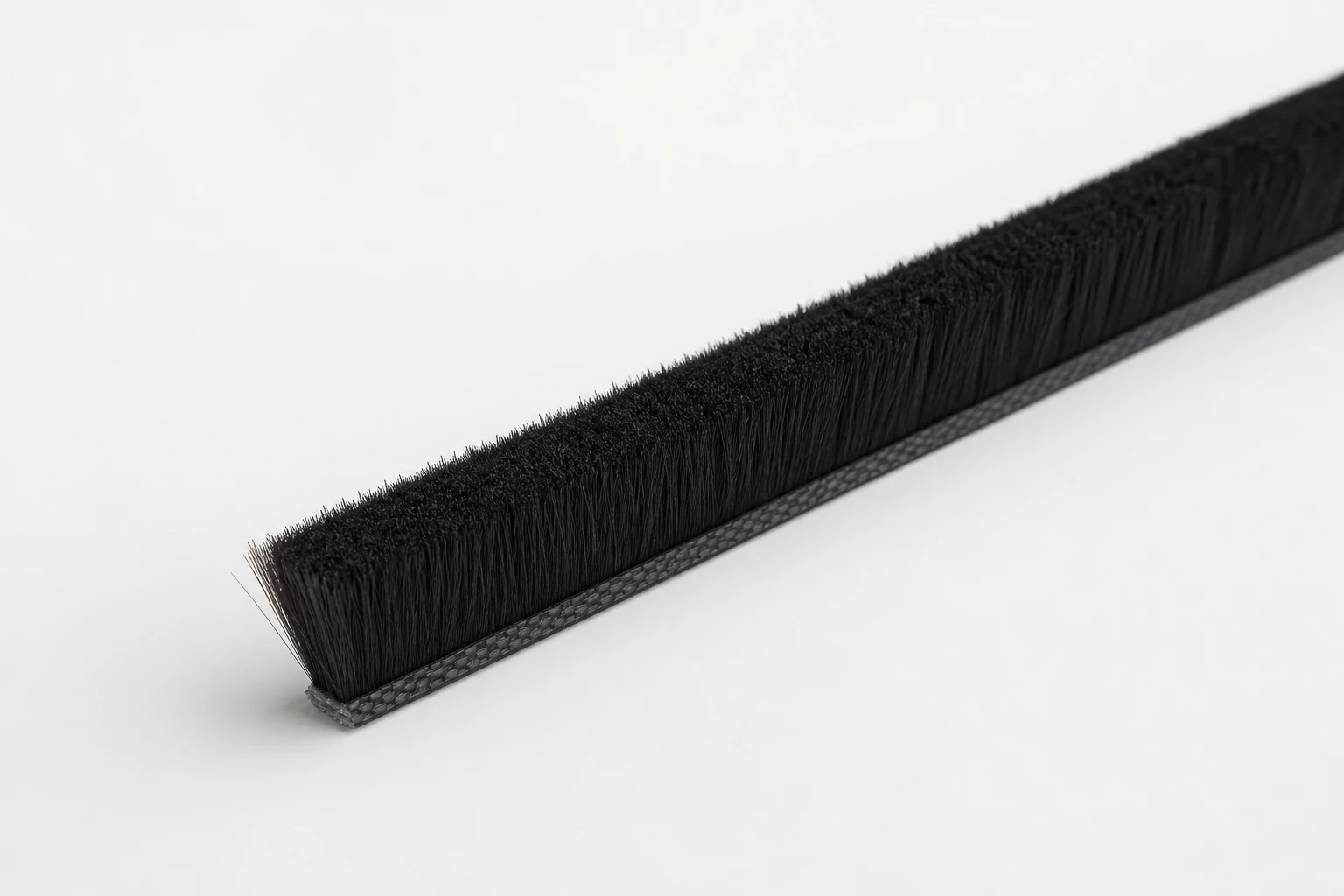
Non-finned wool pile weatherstrip is a standard pile strip without a fin or film element. It is common for regular sliding window and door applications where the profile gap and sealing requirement are already standard.
Many replacement and distributor orders use non-finned pile when the old sample has no fin and the existing system works with regular pile. The buyer still needs to confirm base width, pile height, backing width, backing type, color, density, roll length and packing method before quotation.
When to choose finned pile
Choose finned or film pile when the profile requires a fin option, when the old sample already has a fin, or when the buyer wants to match an existing sliding window system. It is also useful when groove size and pile height indicate that added sealing support may be needed.
Importers and wholesalers should separate finned and non-finned SKUs clearly in their size list. Mixing the two in one purchasing line can create wrong samples, wrong carton labels and confusion during repeat order planning.
- The aluminum profile requires a fin or film option.
- The old sample already includes a fin.
- The buyer needs to match an existing sliding window system.
- Groove size and pile height suggest added sealing support may be needed.
- The importer needs clear finned and non-finned SKU separation.
When non-finned pile is enough
Non-finned wool pile is often enough when the profile gap is standard, the old sample has no fin, and the buyer is planning a regular replacement order. If the existing system works with standard pile, adding a fin may create unnecessary specification changes.
For repair channel buyers and sliding window system suppliers, non-finned pile can be the practical choice when order planning depends on a stable, clearly measured specification rather than a special fin option.
- The profile gap is standard and the current pile type works.
- The old sample has no fin or film element.
- The buyer prioritizes regular replacement stock.
- The existing system works with standard pile.
- Cost and order planning depend on a clear non-finned specification.
Specifications to confirm before quotation
Before requesting a quotation, prepare a specification checklist instead of asking only for finned pile or non-finned pile by name. This helps the supplier check whether the strip can match the sliding window profile and how the rolls should be packed.
If the exact dimension is not confirmed yet, send an application photo, an old sample photo or a drawing. A clear end-section photo beside a ruler is often more useful than a general product photo.
| Base width | Measure the base or groove width that controls profile fit. |
|---|---|
| Pile height | Check the actual gap after sash movement. |
| Backing width | Confirm the backing width shown on the old sample or drawing. |
| Backing type | Confirm insertion backing, backing thickness and any special shape. |
| Fin / no fin | State finned, film pile, non-finned or not sure. |
| Color | Send a color reference, old sample photo or approved color note. |
| Density | Confirm regular or higher density requirement if known. |
| Roll length | State meters per roll and whether mixed specifications need separation. |
| Packing method | Confirm carton labels, roll direction and carton mark requirements. |
| Application photo | Show the sliding window profile and use position. |
| Old sample photo or drawing | Send an end-section photo, profile drawing or current size sheet. |
Common sourcing mistakes
The most common mistake is asking for price only by product name. Finned pile, film pile and non-finned wool pile should be checked by groove size, base width, pile height and backing type before any quotation direction is fixed.
Buyers also lose time when they confuse finned pile with a normal brush seal, mix adhesive and non-adhesive versions, or send unclear photos that do not show the old sample section.
- Asking for a quote only by product name.
- Confusing finned pile with a normal brush seal.
- Not confirming groove size before comparing samples.
- Mixing adhesive and non-adhesive versions in one request.
- Not separating roll length and carton mark requirements.
- Using unclear sample photos without a ruler or end-section view.
What to send before RFQ
Send the information below before asking for price so the supplier can review the fin option, profile fit, packing direction and repeat order record. For mixed orders, separate finned and non-finned specifications line by line.
- Application: sliding window, sliding door, distributor replacement stock or repair channel.
- Size: base width, pile height, backing width and backing type.
- Fin option: finned, film pile, non-finned or unsure.
- Profile reference: groove size, profile drawing, application photo or old sample photo.
- Order planning: color, density, roll length, packing method and carton mark requirement.
Related product pages
Use these pages when you need to compare the product direction, prepare RFQ information or contact ArctiveX with a drawing or old sample photo.
RFQ information checklist
Before requesting price, prepare these details so the supplier can check size, packing, sample and repeat order feasibility.
- Base width
- Pile height
- Backing thickness
- Density
- Color
- Roll length
- Packing method
- Order quantity
- Destination port
Send your drawing, old sample photo, base width, pile height, backing type, fin option and packing requirement so ArctiveX can check the specification before quotation.